Strong, properly engineered concrete slabs and foundations that give your structure the solid base it needs to last.
Everything built on your El Mirage property is only as good as the foundation underneath it. A concrete slab that is too thin, poorly reinforced, or poured on inadequately prepared ground will crack, settle, and eventually compromise whatever sits on top of it. Whether you are building a new home addition, a workshop, a garage, or any other structure, getting the foundation right is the single most important step in the entire project.
In the West Valley, soil conditions present unique challenges for foundation work. Many areas around El Mirage have expansive clay soils that swell when they absorb moisture and shrink when they dry out. This seasonal movement puts tremendous stress on concrete foundations if they are not designed to handle it. We understand these local soil conditions and engineer our foundations accordingly, with proper reinforcement, adequate thickness, and appropriate moisture barriers.
We pour concrete slabs for a wide range of applications. Home additions, detached garages, workshops, sheds, RV pads, equipment pads for HVAC units, and commercial building floors all require properly engineered slabs. Each application has different load requirements, thickness specifications, and reinforcement needs. A slab for a lightweight storage shed is very different from one that needs to support a fully loaded workshop or vehicle.
Foundation work starts well before any concrete arrives on site. We begin with a careful evaluation of the ground conditions. If needed, we work with soil engineers to determine the bearing capacity and any special requirements for your specific lot. In areas with known expansive soils, we may recommend additional measures like deeper footings, post-tension cables, or moisture barriers to protect the foundation from soil movement.
Excavation follows the engineering plan precisely. Footings are dug to the required depth and width, the subgrade is compacted, and gravel base material is placed and leveled. Any underground plumbing, electrical conduit, or mechanical rough-ins need to be installed and inspected before the pour. Coordination with other trades is critical at this stage since anything that needs to pass through or under the slab must be in place before the concrete goes down.
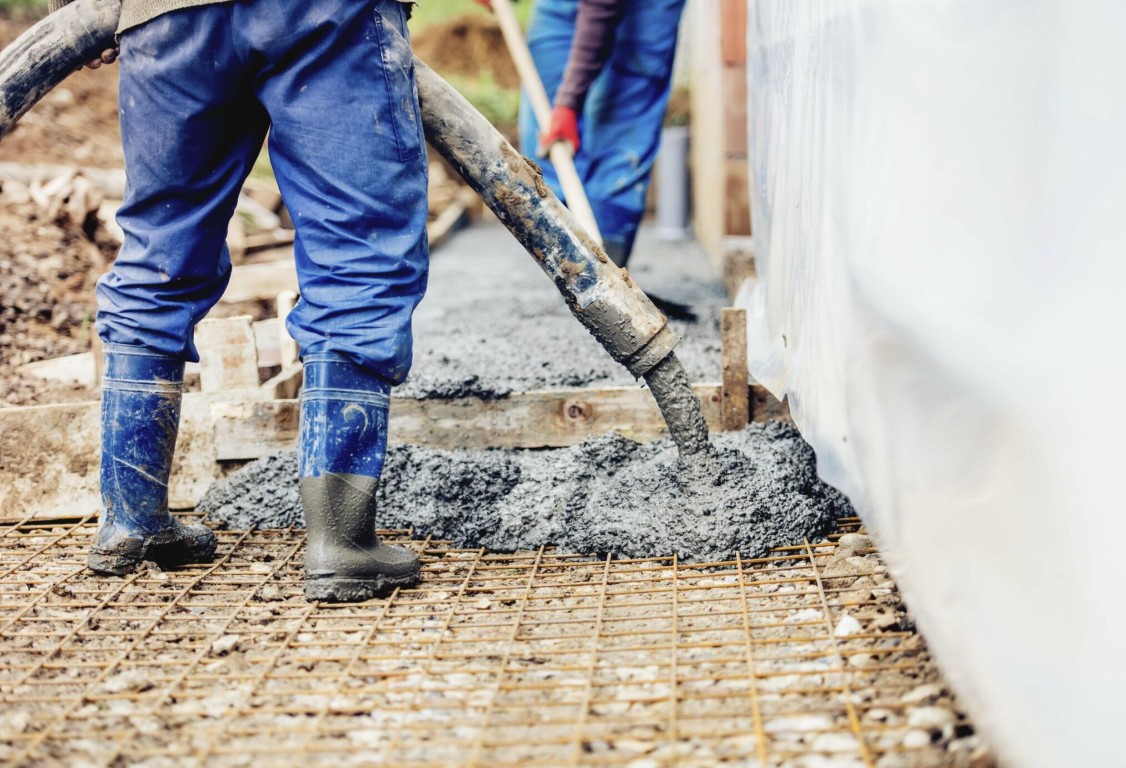
Reinforcement is placed according to the engineering specifications. This typically includes rebar in the footings and throughout the slab, positioned on chairs to keep it at the correct height within the concrete. Some foundations also use post-tension cables that are stressed after the concrete cures to compress the slab and resist cracking. A vapor barrier is laid over the ground to prevent moisture from migrating up through the slab, which is especially important for enclosed structures where flooring will be installed.
Foundation pours require precise timing and adequate manpower. Large slabs need enough concrete trucks scheduled back to back so the pour happens continuously. Any delays between loads can create cold joints where sections of concrete don't bond properly. Our team coordinates the pour logistics carefully to ensure a seamless, continuous operation from start to finish. After screeding and floating the surface, we apply the appropriate finish. Garage and workshop floors typically get a smooth trowel or broom finish, while slabs that will be covered with flooring get a basic float finish.
New construction is the most obvious time you need foundation work, but it is not the only situation. Home additions, whether it is a new room, an expanded garage, or a covered patio enclosure, all require proper foundation slabs. Detached structures like workshops, casitas, and pool houses need independent foundations sized to their specific load requirements.
Existing foundations sometimes develop problems that require attention. Cracks in your foundation can indicate soil movement, inadequate reinforcement, or water damage. Concrete leveling can address minor settling, but significant foundation damage may require partial or complete replacement. We assess foundation issues honestly and recommend the most practical and cost-effective solution for each situation.
Outdoor structures benefit from proper foundations too. A concrete slab under your shed keeps it level and protected from ground moisture. RV pads need to be thick enough and strong enough to support the weight of your vehicle without cracking. Even something as simple as an air conditioning unit pad needs to be level and stable to keep your equipment running properly. We build all of these with the same attention to quality that goes into our larger foundation projects.
Ready to start your project on a solid foundation? We serve El Mirage and surrounding areas with expert concrete slab and foundation services.
Call (480) 701-8016